
Article Executive Leadership 5 min read
What Made Ben Bradlee a Great Leader
The late Washington Post editor appeared to the world as a larger-than-life figure. But his life also contained plenty of practical lessons for any exec.
Heads up: this content is over 5 years old, so some information may be out of date.
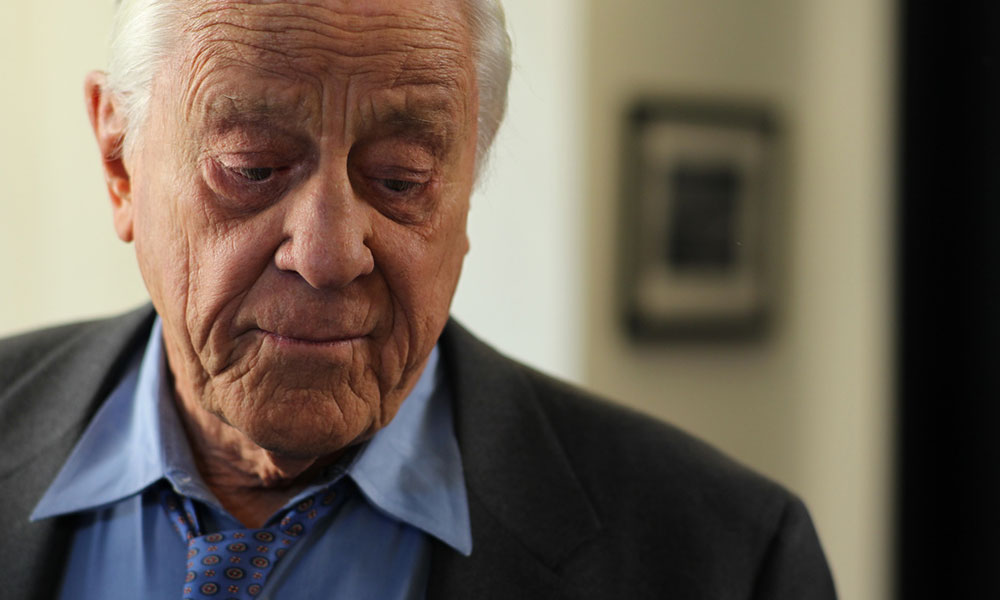
We’re never going to see the likes of Ben Bradlee again, reportedly.
Since the longtime editor of the Washington Post died last Tuesday at 93 (opens in a new tab), we’ve been awash in tributes to Bradlee, praising him for his masterful steering of the paper. Rightly so: In the 70s, he supported the publication of the Pentagon Papers and backed the bulldog Watergate reporting that forced President Richard Nixon’s resignation. On less attention-grabbing but essential fronts, he enlivened the paper’s features and kept the Post steady as a business when plenty of economic forces were (and are) determined to shipwreck it.
But I’ve been irked by the end-of-an-era tone that’s crept into much of the Bradlee coverage. “Ben Bradlee did things (opens in a new tab),” goes one piece in the New York Times. “He went to war, loved early and often, befriended and took on presidents, swore like a sailor, and partied like a movie star.” Read a few of these pieces and you’d think leadership itself had died. But if Bradlee’s death represents a bigger loss, it’s of a particular perception of what leadership was supposed to be—swashbuckling, foul-mouthed, macho.
I can live without all that; I’m on the record as not being a big fan of charismatic leadership. But in truth charisma accounted for only a portion of Bradlee’s success. Scrape all that stuff off, and what’s left is an interesting, sometimes flawed leader whose actions are very much imitable by anybody in the corner office.
“Ben never stopped watching over me.”
Never forget talent when you see it, and nurture it. The second-best tribute to Bradlee (opens in a new tab) I’ve read comes from reporter Ted Gup, who discussed how Bradlee rejected him for an internship and then took years to hire him at the Post. Gup kept sending Bradlee his best articles; Bradlee sent back encouraging notes and, when he finally could, hired him. “I had my moments and my stories, but was never one of the Post’s true heavyweights. But Ben never stopped watching over me,” Gup writes. How well are you monitoring the people who could do great work for you, be they volunteers or staff, even if you can’t take them on just yet?
Fight the good fight for diversity. The best tribute to Bradlee I’ve read comes from Rachel Jones, a black reporter who was actively courted by Bradlee in the early 80s. Bradlee, Jones writes, recognized that his own background empowered him to support others who didn’t share it (opens in a new tab). “Bradlee wanted me to come to the Washington Post because he was a powerful, privileged white male SUPER HERO of American journalism and he could whatever he [foul-mouthed word] well wanted to do,” Jones writes, noting that he recalled him saying, “We have GOT to make an effort to include voices besides our own in this [foul-mouthed word] newspaper.” Newsrooms have long had diversity issues, but Bradlee possessed the baseline awareness that’s necessary to address them.
Call shenanigans when necessary. A good leader is a buffer between staff and the nonsense that can interfere with them doing their work. Which is why so many people have been amused and gratified by a tart memo that Bradlee delivered in 1990 (opens in a new tab) to a public relations firm insisting the Post cover a circus-related story. The PR firm was apparently persistent enough to prompt a retort from Bradlee: “I would like to be sure that you understand that we trust our editors’ news judgment and that we distrust yours,” he closed. It’s a great reply—just polite enough to be printable, with enough attitude in it to deliver the message—which in this case was buzz off. It’s a skill worth developing.
Weather mistakes. If you want to find the unflattering stuff in an obituary, skip to the middle. In Bradlee’s, that’s where you’ll find the tale of Janet Cooke, the Post reporter who delivered a heart-wrenching, Pulitzer-winning story of a child heroin addict—only to later confess that she’d fabricated the story, forcing Bradlee to return the Pulitzer. The Cooke saga revealed two flaws in Bradlee, as the obituary puts it: He “had a notoriously short attention span,” and “personnel management” was never one of his strong suits. Those shortcomings created the crisis, but recognizing them, he pushed past them.
Hire good people and let them do good work. Bob Woodward and Carl Bernstein’s Watergate reporting has acquired such a mythology around it that many might think the pair wrote one story that blew the lid off the Nixon administration and that he resigned the next day. But the Watergate reporting took months and didn’t always have a clear direction. Bradlee supervised without stifling. In the Post obituary Woodward himself recalled Bradlee as a leader who used his skepticism to push him toward clarity: “‘He was a presence, a force,’ Woodward recalled of Mr. Bradlee’s role during the Watergate period, 1972 to 1974. ‘And he was a doubter, a skeptic — “Do we have it yet?” “Have we proved it?” Decades later, Woodward remembered the words that he most hated to hear from Mr. Bradlee then: ‘You don’t have it yet, kid.’”
Newsrooms are peculiar places, and Bradlee was unquestionably a different kind of leader. But the things that made him great are within the skill set of any good leader in any context.
(photo by Miguel Ariel Contreras Drake-McLaughlin/Flickr)

Comments
Comments are for ASAE members. Learn more about comments on this site.
Log in to your member account or join ASAE!