
Article Conscious Inclusion 6 min read
Is Bias Affecting How You Lead?
Heads up: this content is over 5 years old, so some information may be out of date.
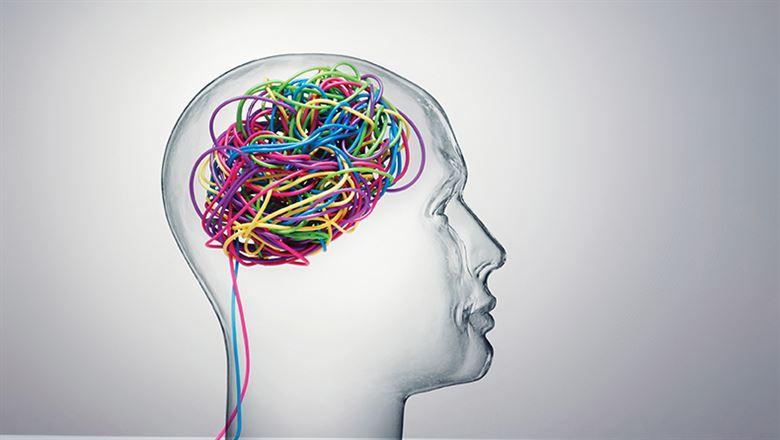
It’s difficult for most people to admit they have biases. But the truth is everyone has them, and many biases are unconscious. For association leaders, those hidden prejudices can have a cascading effect that reveals itself in everything from staff hires to member retention. In fact, experts warn that unconscious bias can even halt organizational innovation.
If leaders want their association to flourish, they must be able to acknowledge that they have unconscious bias, understand the ways it can hold back their organization, and embrace strategies that can mitigate it.
“Neither you nor I want to get told that we’re biased,” says Michael Brainard, Ph.D., CEO and founder of the leadership consulting firm Brainard Strategy. “There is something that has happened in popular literature that has made it a bad thing. There has been an element of misunderstanding and even shame in some cases. But our cognitive biases are part of the human condition.”
Brainard says bias is simply the brain’s way of helping a person make decisions quickly with very little information. “Our default setting is to make fast decisions,” he says. “It keeps us alive.”
People’s individual prejudices are often rooted in society’s larger biases. For example, many people have archetypes in their minds about what a specific type of person should look like.
“If you had to promote two people into a vice president position, you would want to make sure your decision is good and right,” Brainard says. “To determine if it’s good and right, your brain searches for an archetype. You have an archetype of what the vice president looks like. If you don’t have an archetype of a successful female, you have to work extra hard to get to the female when you make your decision.”
Recognizing that everyone’s brain has sets of preconceived notions, archetypes, and biases is important for leaders. “I would say the first thing is to realize we all have unconscious bias,” says Sal Mistry, assistant professor of business administration at University of Delaware. “Even the best decision makers are prone to biases. Make sure you understand that.”
The Company You Keep
When unconscious bias goes unchecked in leaders, the impact on an organization can be significant. According to Brainard, bias typically presents itself among leaders in terms of the company they keep.
The unconscious thinking goes like this: “I want and value information from these groups of people because these groups of people have, in the past, delivered for me, or we share a common background,” he says. “I am moving toward those people when I am seeking to understand something.”
On the other hand, people often steer clear of those who conflict with their beliefs or are not like them—without even realizing it. “Am I aware that I might avoid certain people because they have a disparate opinion, or a different background?” Brainard says.
Pamela J. Green, a leadership consultant and Association CareerHQ coach, agrees that a good way to assess your own unconscious bias is to consider who you spend time with. “Start looking around you,” Green says. “Who do you go to lunch with? Who do you hang around with? What kinds of events are you being invited to, and how many people of color are there? That will help you understand whether you have a bias. What are the conversations going on in those quiet spaces?”
The groups who have the leader’s ear often recommend others for key positions or help with board recruitment, which can lead to more homogeneity. When the senior leadership team lacks diversity because unconscious bias has led them to surround themselves with others who look and think like them, others are filtered out.
“A big [question] is, who gets training and development?” Green says. “Follow the money trail. Who are you investing in most, and what do they look like? Where are we spending most of our dollars, and why?”
When leaders insulate themselves with others who are like them, they send a message to staff and members that some groups are valued more than others, and the impact can spread across the association. For example, speakers at events who reflect only part of the member community or the industry often are a symptom of leaders’ unconscious bias. And eventually, members notice.
“If the people of color come in and don’t see anyone that looks like them on the board, and they go to the conference and 98 percent of the presenters don’t look like them, they say, ‘I’m not paying dues for this,’” says Cie Armstead, diversity and inclusion director at the American College of Healthcare Executives. “The message that sends is, ‘You’re not only not welcome here, but you don’t have a chance to succeed.’”
Organizational stagnation can also be a side effect of unconscious bias in leaders. “Innovation usually comes from discomfort or challenges,” Brainard says. “If I am constantly seeking comfort and not allowing myself to make mistakes or process new data, it’s going to be hard to innovate.”
And even if there is diversity in the room, leaders unwilling to listen won’t reap the benefits. “How willing are you to accept information that doesn’t confirm what you believe?” Green says. “To bring out some of the diversity of thought in the room, we have to break away from the confirmation bias. You have to be willing to acknowledge there’s validity in what they said.”
Mitigating Bias
While the human brain is built for bias, that doesn’t mean leaders have to surrender to it. Experts say those who want to mitigate the effects of unconscious bias have some tools. The first is to slow down when making big decisions.
“We want to use multiple criteria, not just one or two,” Brainard says. “We want to use multiple methods and get multiple and disparate points of view. If we can get multiple points of view, that can slow us down and allow us to mitigate our own biases.”
Also, it’s important for leaders to approach learning and decision making with an open mind—with a growth mindset rather than a fixed mindset. “People who have a growth mindset are willing to fail and looking to grow and learn,” Mistry says. “The person with a fixed mindset is just looking to get things done. They believe people are smart or not smart. If you want to be a better decision maker, you have to be willing to be a lifelong learner.”
Brainard agrees, noting that mitigating unconscious bias requires leaders to get out of their comfort zone.
“I think three things are critical: humility, discomfort, and discipline,” Brainard says. “Real development occurs when we’re uncomfortable, when we’re humbled. That’s where change occurs. I have to get other points of view to challenge my own vision, because I’m aware as a humble, disciplined leader that my experience is just that—my experience.”
When leaders recognize their biases, slow down, and get more opinions, they’ll not only be better leaders but also helm better associations.
“You can beat out your competition when it comes to membership dollars and nondues revenue dollars when you have more heads with diverse backgrounds at the table,” Green says. “We are only going to get where we need to get as an organization if we are willing to accept other ideas.”
[This article was originally published in the Associations Now print edition, titled “Overcome Your Unconscious Bias.”]
Comments
Comments are for ASAE members. Learn more about comments on this site.
Log in to your member account or join ASAE!