
Article Marketing / Communications 4 min read
Newspaper Association of America: Lessons From a PR Stumble
The Newspaper Association of America wasn't out of line to criticize John Oliver's segment on journalism. But when associations push back in public, what you choose to criticize matters.
Heads up: this content is over 5 years old, so some information may be out of date.
Associations exist to support—and if need be, defend—their industries. That’s simple enough. But that simple mission gets tricky sometimes when it comes to how you do that.
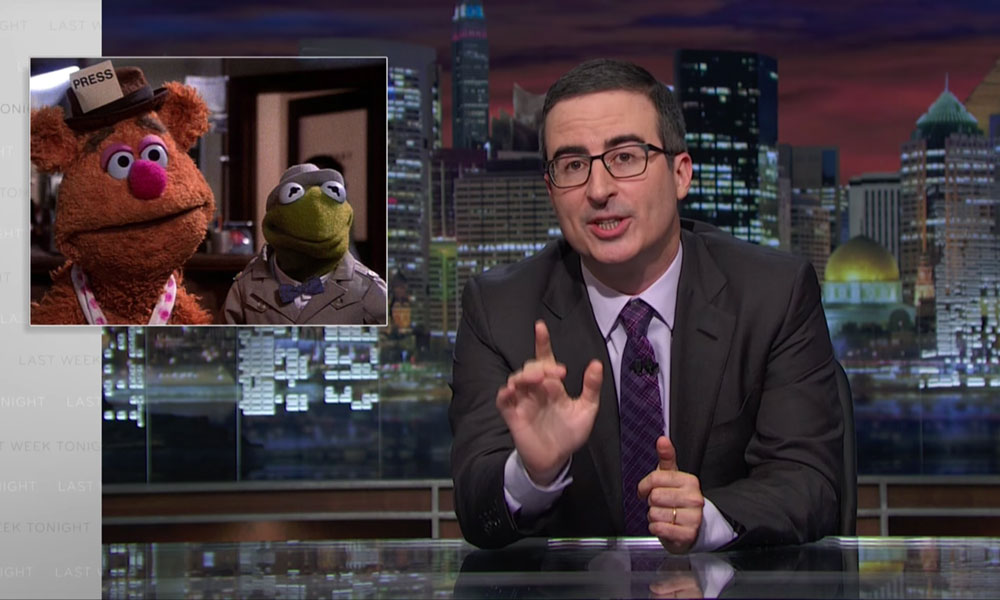
Case in point: John Oliver. Last week the promiscuously British-accented comedian used his HBO news-slash-comedy show, Last Week Tonight, to deliver a withering critique of news organizations that have responded to a decade of budget cuts and reduced local-news coverage with glittering promises of digital salvation. Oliver’s chief target was Tronc, the recently renamed iteration of Tribune Publishing that announced its arrival in June with a clumsy name and a promotional video overflowing with buzzwordy gobbledygook (opens in a new tab). Here’s Oliver’s riff:
Newspaper Association of America president and CEO David Chavern was not amused, and in an August 8 statement he pushed back hard (opens in a new tab): “Making fun of experiments and pining away for days when classified ads and near-monopolistic positions in local ad markets funded journalism is pointless and ultimately harmful,” he wrote. “I would just ask Mr. Oliver to spend more time talking about what the future of news could be, and less time poking fun at publishers who are trying to get there.”
“I would just ask Mr. Oliver to spend more time talking about what the future of news could be,” Chavern wrote.
Chavern did concede that Oliver’s commentary about the importance of local news coverage made a fair point. But to many in the journalism world, Chavern’s statement looked a whole lot like a media organization telling the media how it ought to talk, which is not a good look when the backbone of your industry is the First Amendment.
Josh Horwitz at Quartz gathered a variety of responses (opens in a new tab) from among the newspapers the NAA serves, including one from Washington Post editor-in-chief Marty Baron tweeting that Chavern’s statement “could not be more clueless.” Post media columnist Margaret Sullivan prescribed a sense of humor and an ability to take criticism in stride: “When someone hilariously and poignantly celebrates the industry that you are paid to defend and protect, you ought to laugh at the funny parts and then simply say ‘thank you.’ Or maybe nothing at all.”
Chavern, as Sullivan points out, is a newcomer to the newspaper business: He arrived to NAA from the U.S. Chamber of Commerce last fall. That’s not a flaw: As we discussed at the time of his hiring, Chavern is just the latest example of a longstanding debate over whether industry-specific experience matters more than general leadership experience. And he responded to the criticism with poise, telling journalism nonprofit Poynter that “the only thing I was trying to get at was, when you get into talking about companies that are trying new things, like Tronc and The Washington Post, if you don’t get across that they’re experimenting, you fall into the trap of saying, ‘well, weren’t the good old days great?’”
Fair enough. But here’s the problem—and one every association leader should think about when brickbats come the organization’s way.
Chavern wasn’t just talking about Oliver’s failure to stress that Tronc’s efforts are an experiment. He was thrusting the burden of devising a fix onto Oliver’s shoulders: “He doesn’t offer any answers,” Chavern wrote. “John Oliver doesn’t seem to have any better ideas.” Every association is different, but one common thread is that their leaders ought not get into the business of complaining that their critics ought to come up with better ideas for improving your industry.
Because that’s your job. Coming up with better ideas is what you’re coming to the office to do. It’s what drives your board meetings. It’s what motivates your staff. It’s what’s behind everything you devise to serve your members and customers.
It’s not particularly important whether you, as the head of an association, have a sense of humor or not. But how you respond still matters—you can either demand more of your critics, which is a losing battle, or you can point the public to the work you’re doing that sets you above what your critics say. Failing to do so represented a missed opportunity for NAA.
What does your association do to respond to public criticism of your industry? Share your experiences in the comments.
John Oliver was a target for the Newspaper Association of America last week. (YouTube screenshot)

Comments
Comments are for ASAE members. Learn more about comments on this site.
Log in to your member account or join ASAE!