

Leadership, Legacy, and the Leap to Tuscany
For Scott Steen, leadership was never about staying put. As he prepares to step away from association life, he reflects on timing, transformation, and the responsibility of knowing when to pass the baton.
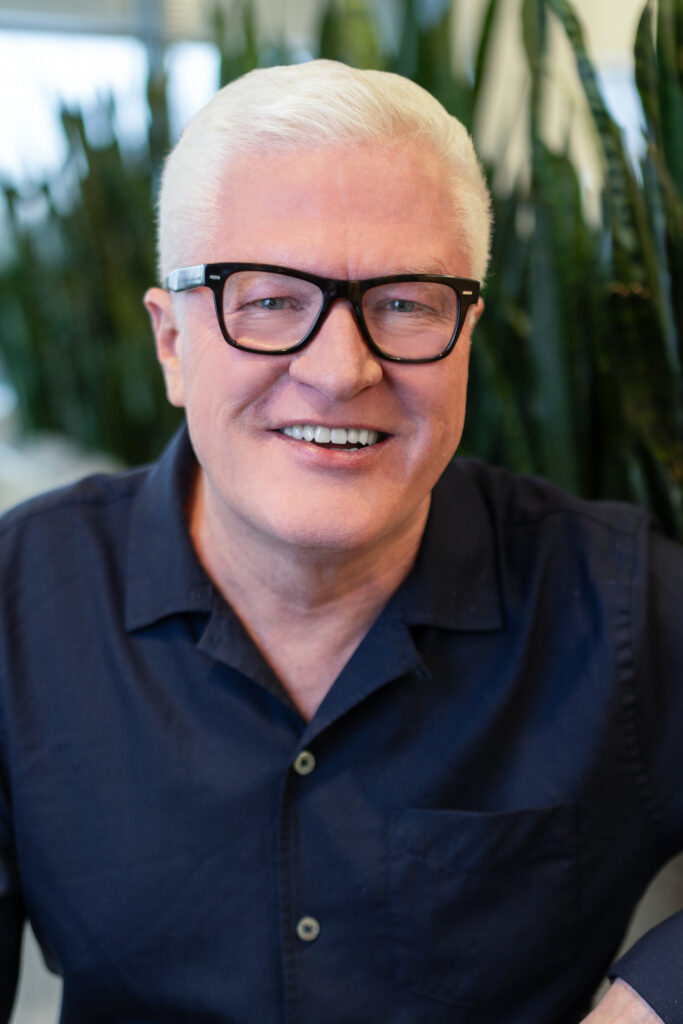
After nearly 35 years in associations and almost two decades as a CEO, Scott Steen, FASAE, CAE, is preparing to step away from the profession that has shaped his adult life. In early 2026, he will conclude his seven-and-a-half-year tenure as CEO of the American Physiological Society (APS)—a period marked by modernization, program expansion, strategic restructuring, and steady leadership during a turbulent era for scientific organizations.
The decision to leave, he says, didn’t come from burnout or dissatisfaction, but from a moment of unmistakable clarity.
“My husband David is 7 years older than I am. He retired this past January,” Steen said. “We had been talking the previous summer. David made the mistake of sending me an ad for a house in Tuscany and I looked at that and said, ‘Why are we waiting? We could do this now.’”
For years, Steen assumed he would work well into his late sixties. But the spark of that conversation prompted deeper reflection.
Last year, he “came to the conclusion that it was time to do something different … I just had a sense that I’ve been doing this for my entire adult life. And while I wasn’t planning to retire at 61, I realized that making the change while I was still relatively young would allow me to have a very different third act.”
That realization didn’t simply mark the end of a chapter—it opened a door. Steen began to see a path not defined by deadlines and organizational cycles, but by creativity, reinvention, and the freedom to build something entirely new with David.
That freedom will take the form of a permanent move to Cortona, Italy, where he and his husband plan to build a life centered on creativity, community, and a long-deferred passion for art.

Becoming a Leader: Early Grooming and Lessons That Endure
Steen’s approach to leadership did not emerge incidentally—it was forged through a series of roles that demanded influence, self-awareness, and the ability to collaborate without relying on positional authority.
His first job in Washington, DC, was in 1991 at the National Wooden Pallet and Container Association, “proving that there is absolutely an association for everything,” Steen said.
While writing a book for ASAE, he interviewed Susan Sarfati, FASAE, CAE, the CEO of the Greater Washington Society of Association Executives and an association leader widely known for her innovative thinking.
“I was interviewing Susan,” Steen recalled, “and in the middle of the interview, she said, ‘I want to hire you.’ And I said, ‘What are you talking about? For what?’ She said, ‘Your job would be to make us better.’ She said, ‘You pick your title and you can come on, work anywhere you want in the organization, and figure out how to make us better.’”
At the time, the idea for the Center for Association Leadership was taking shape. Steen helped build out that concept, spending his days walking around the office, sitting with department heads, and working with them “to think differently about where we were going and what we were doing.”
“It was in some ways great training for a CEO role,” he said. “Although it was initially all about influence rather than authority because I had no real portfolio. It was all about getting other people to collaborate.”
That job morphed into a role as COO of the Center for Association Leadership. When GWSAE merged with ASAE in 2004, Steen became chief strategy officer at ASAE. Then, in 2006, he took his first head job as executive director of The American Ceramic Society.
“I’ve been a CEO for going on 20 years. It’s a long time,” Steen said. When he took his first CEO job, his former boss, ASAE’s longtime president and CEO John H. Graham IV, FASAE, CAE, took him to lunch and offered advice that reshaped his approach to leadership.
“He said, ‘IQ has gotten you here, but EQ becomes more important for everything after this,’” Steen said. “Much of my career to that point was about being the person that had the idea. But a lot of the CEO job is refereeing other people’s ideas, or turning your ideas over to other people to let them make them a reality. I think a big part of effective leadership is realizing that you are not always going to be the person with the right answer or the best idea.”
That shift—from being the idea-generator to being a consensus builder and curator of a group’s best thinking—became the defining characteristic of his leadership.
Knowing When It’s Time
If there is a thread that runs through Steen’s career, it is his instinct for timing. He has stepped into organizations at moments when his specific skills were most needed, and he has left when he believed the institution required something—or someone—different. That intuition, he says, has been central to his leadership.
His tenure at American Forests from 2010 to 2018 reflected that pattern. He focused on building a strong brand, organizational strength, financial stability, and programmatic clarity. He was brought in for “business skills,” and he delivered a stronger scientific foundation, broader public understanding of forests’ importance, and improved stewardship and transparency. But when the organization needed a different type of leader, Steen saw it before anyone else.
“One of the most important things about leadership is knowing when something different is needed and when to leave,” Steen said. “[At American Forests], I got to a point where I realized this organization needs a visionary environmental expert on forest conservation to take it to the next level and I’m not that … I knew that our business model needed to shift to greater foundation and government funding for substantial growth to occur and that wasn’t really my strength.”
That same clarity shaped his decision to leave APS. Over seven years, Steen helped transform the society into a more agile, strategic, and outward-facing organization. Under his leadership, APS adopted an open access publishing model for 10 of the Society’s primary research journals; reinvigorated its brand; and modernized operations, governance, and infrastructure. Still, with severe challenges to federal funding of biomedical research, he knew that he would either need to commit for the long run or make way for new leadership.
“Generally, I don’t think an association CEO should stay much more than 10 years because I think you start playing your greatest hits,” Steen said. “It is too easy to begin to think that you are the organization.”
For Steen, leadership is something you steward while you’re effective, not something you keep simply because you occupy the seat.
“I’ve had a great career,” Steen said. “I’ve worked for organizations I’ve loved and cared about and I’ve gotten to do important work. I’ve built great teams. I’ve left organizations better than I found them. But at the end of the day, a leader is always temporary, always a steward for a particular period of time.”
How Leadership Has Changed
Across his career, Steen’s vantage point has allowed him to see the CEO role evolve in real time.
“It’s much harder now,” he said. “The old advice was you have to wait six months and get the lay of the land. That advice doesn’t work at all anymore. You have to start doing stuff from your first day.”
He also notes the rising emotional demands of the job. “I never thought I’d be getting into political conversations in my job … knowing I have members who are probably on both sides but also knowing that they’re being threatened in ways.”
Despite the shifting landscape, certain core challenges endure.
“You have to be willing to make decisions that you hate,” he said. “And you have to do it with humility and humanity somehow.”
A New Life in a Very Old Town
The next chapter awaiting Steen and his husband David in Cortona is less a relocation than a full-hearted reinvention—a shift toward creativity, community, and the deliberate choosing of a different pace. And almost from the start, it felt as if the town chose them back.
During a month-long visit last summer to explore whether Cortona could truly become home, Steen posted a simple note in a local expat Facebook group asking if anyone might be willing to meet for coffee, drinks, or dinner while he and David looked for a house. The response was immediate.
“Very quickly I had 12 people inviting us out for drinks or dinner,” he said. “We ended up going out probably 20 times that month with people. By the end, we would be sitting in the piazza having aperitivo and people would be pulling up chairs to our table … people we had not known at all two or three weeks before. Suddenly, it was like we have a whole community here.”
That warmth extended well beyond aperitivo hour. At one point, their real estate agent told them he essentially had “the whole town working to make sure you get here.”
Cortona is a place that has welcomed newcomers for millennia. One of Tuscany’s oldest continuously inhabited towns, its origins date back to the Etruscans around 500 B.C. The layers of ancient stone, medieval streets, and Renaissance architecture give Cortona a timeless gravitational pull—one that artists, writers, and expats have long found irresistible.
Its international profile grew even more after Frances Mayes’s Under the Tuscan Sun cast Cortona as a place where transformation is possible. Today, the town retains that blend of history and creative energy, offering what Steen describes as both “enticements and challenges,”from learning Italian to navigating the country’s famously intricate bureaucracy.
“It’s just a stunningly beautiful place and it has amazing history and culture and art,” he said. “I want my focus to be much more on art. I started my career as a graphic designer and I’ve kind of approached a lot of my work from an artistic point of view.”
The move also brings a welcome shift in identity. “We realize we’re becoming immigrants, which is a weird thing,” Steen said. “But it’s pretty amazing. I’m excited.”
In Cortona—a very old town welcoming the start of a very new life—Steen is stepping into a community, a creative chapter, and a sense of belonging he didn’t know he’d been missing.

Chris Vest, CAE is vice president, corporate communications and public relations at ASAE. MORE
Got an article tip for us? Contact us and let us know!




Comments