 Sponsored By Visit Pittsburgh
Pittsburgh: A Midsize City Offers Outsize Potential
Once defined by steel, Pittsburgh now offers business travelers a rare mix of affordability, walkability, and metropolitan energy—without the big-city stress.
In the 25-plus years he’s lived in Pittsburgh, Aaron Sukenik, vice president of district development for the Pittsburgh Downtown Partnership, says he’s never gone looking for something and come up empty-handed.
“I grew up in a big, traffic-heavy metro area, where it could take half a day to pick up a two-by-four. Here, we have all the trappings of a big city with none of the hassle,” he said. “A family can afford a home and build wealth, which has become almost impossible on the coasts.”
Pittsburgh is squarely mid-size, with a population of approximately 300,000 in the city proper, and serves as a gateway between the East Coast and the Midwest. It might be hard to believe, but when you’re standing in Pittsburgh, you’re within 500 miles of half of the U.S. population—Washington D.C., Philadelphia, Buffalo, and Cleveland are all within a five-hour drive.
Given its location, not to mention its top-notch sports and music venues, it’s no surprise that Pittsburgh’s downtown has evolved to meet the growing demand for high-value, low-cost business travel amid rising travel costs and shrinking budgets. Today’s business travelers expect great food, safe and walkable entertainment, and an authentic destination experience. Pittsburgh stands out not only for its thoughtful infrastructure and development, but also for its visitor-friendly, experience-rich opportunities to connect with the city and the community.
“There’s a great energy about what we offer, including a cultural district with half a dozen theaters and professional sports teams, and a downtown that feels big when you’re in it, with an expansive skyline, but can be walked from end to end in 15 minutes,” said Sukenik.
Low hassle and walkability make all the difference when choosing where to spend precious business travel dollars. With business districts in various neighborhoods, a lively and safe downtown, and all the music, arts, and sports of a major metropolitan area, Pittsburgh is no longer the industrial post-steel town of the 1980s. Today, it’s a healthy mix of the old and the new, with a downtown population that’s doubled in size over the past 20 years.
But given all that you can access within a stone’s throw of the convention center, you and your team will want to stay put. Within a 10-minute walk of the convention center are plenty of affordable accommodations and restaurants, from high-end to casual, and lower crime rates than almost any other U.S. city.
“The safety of downtown is vital,” said Jerad Bachar, president & CEO of VisitPITTSBURGH. “The data shows that we’re far surpassing the majority of cities in our competitive set on the safety circle surrounding city convention centers.”
The natural environment is one of Pittsburgh’s biggest draws, and one of the main reasons tourism has been climbing since the pandemic, with no signs of slowing. “You don’t have to leave the city to experience its park system, which has been ranked one of the best in the country, which is partly due to having one of the highest per-capita philanthropic dollars,” said Sukenik.
Water fans can rent a kayak to paddle through downtown or take a sightseeing boat tour, and sports fans have their pick of professional hockey, baseball, football, and soccer games at local venues. PNC Park, home to the Pirates MLB team, boasts a scenic view of the Allegheny River.
Unlike many metropolitan areas that sprawl for miles, Pittsburgh is what Tim Muldoon, general manager of the David L. Lawrence Convention Center, calls a “tight, compact package,” geographically hemmed by its three rivers: the Allegheny, the Monongahela, and the Ohio.
“Everything’s within walking distance, which is convenient but also keeps down costs. No shuttle buses required,” said Muldoon.It’s also easy to get to Pittsburgh’s downtown from the North Shore, with free rides available on “The T,” the city’s light rail system.
The convention center is a destination in itself, with outdoor spaces and views of the city skyline from every major room, and a unique, curving roof created with a suspension cable system—echoing the city’s many bridges and welcoming natural light, while facilitating the building’s natural ventilation system, which uses river breezes for zero-cost cooling.
“Unlike many convention centers, you’ll never feel like you’re underground,” said Muldoon. “When you’re here, you feel like you’re in a specific and special city.”
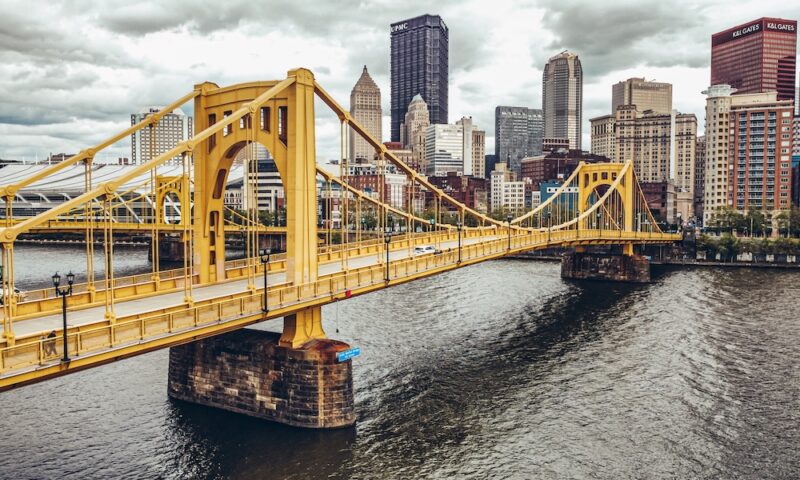
Historically, Pittsburgh is known for its 446 bridges—more than Venice—and for being the largest inland port in the country as well as steel capital of the world. But today, you’re less likely to run into a steeler than a robotics expert.
“The old Pittsburgh was defined by steel and smoke and industrial might—but the city has transformed into a knowledge-driven economy leading in sectors like robotics, artificial intelligence, healthcare, and energy,” said Sukenik. “The University of Pittsburgh and Carnegie-Mellon and the UPMC Health system all spin off a lot of business and innovation in the life sciences and tech areas.”