
 Sponsored By Higher Logic
6 Trends Redefining the Association Member Experience
Associations have long played a distinct role in professional life: bringing people together to share knowledge, set standards, and advance their fields. That role remains essential, but the way members discover, evaluate, and engage with associations is evolving rapidly...
As digital-first, on-demand, and AI-influenced experiences shape professional behavior everywhere else, associations are being measured against a broader set of experiences—not just other associations. Research shows that member experience and perceived value are no longer defined by benefits alone, but by how relevant, intuitive, and visible that value feels across the full member journey.
Drawing on findings from Higher Logic’s recent Association Member Experience Report, Marketing General Incorporated’s Membership Marketing Benchmarking Report, and recent conversations with association leaders, let’s explore some of the key factors associations should think about in 2026.
1. You Need Technology to Meet Rising Expectations
Recent data suggests associations are performing well. According to the 2025 Association Member Experience Report, 82% of members say they feel engaged, and 83% plan to remain members for at least the next five years. Members increasingly view associations as trusted partners in their careers.
But that success brings higher expectations. Members now compare their association experience to the seamless, personalized experiences they encounter in their everyday digital lives.
“Associations are the original platforms for trust,” Erin Fuller, global head of association solutions for MCI Group and chief strategy officer for MCI USA, said during a recent episode of The Member Engagement Show podcast. “Before all the algorithms, they were sustained by community. That’s still the secret sauce, but the expectations for that relationship are inherently different now.”
The challenge, then, is not simply driving engagement, but sustaining it through experiences that feel current, purposeful, and easy to navigate. To support these modern experiences, associations must ensure that their technology is up to the task.
“The number of associations I talk to that say, ‘We haven’t changed our website in the last eight years’ is staggering,” said Reggie Henry, CAE chief information and performance excellence officer for ASAE. “That’s technology debt and it costs you, because you’re forcing members to interact with experiences that no longer match what they expect.”
Technology debt builds when platforms, integrations, and user experiences fall behind member expectations and become harder to maintain over time. Addressing it requires regular evaluation of core systems—especially websites, community platforms, and data infrastructure—and making intentional investments that prioritize usability, accessibility, and long-term flexibility.
2. Lack of Awareness Is a Primary Barrier to Growth
When we examine why eligible professionals don’t join associations, the findings point to a basic (but hard to overcome) issue: many prospects don’t even know that a relevant association exists.
Nearly half of nonmembers report they are unaware of an association aligned with their role, industry, or interests. And, they say they primarily discover professional resources through online search, social platforms, and digital content.
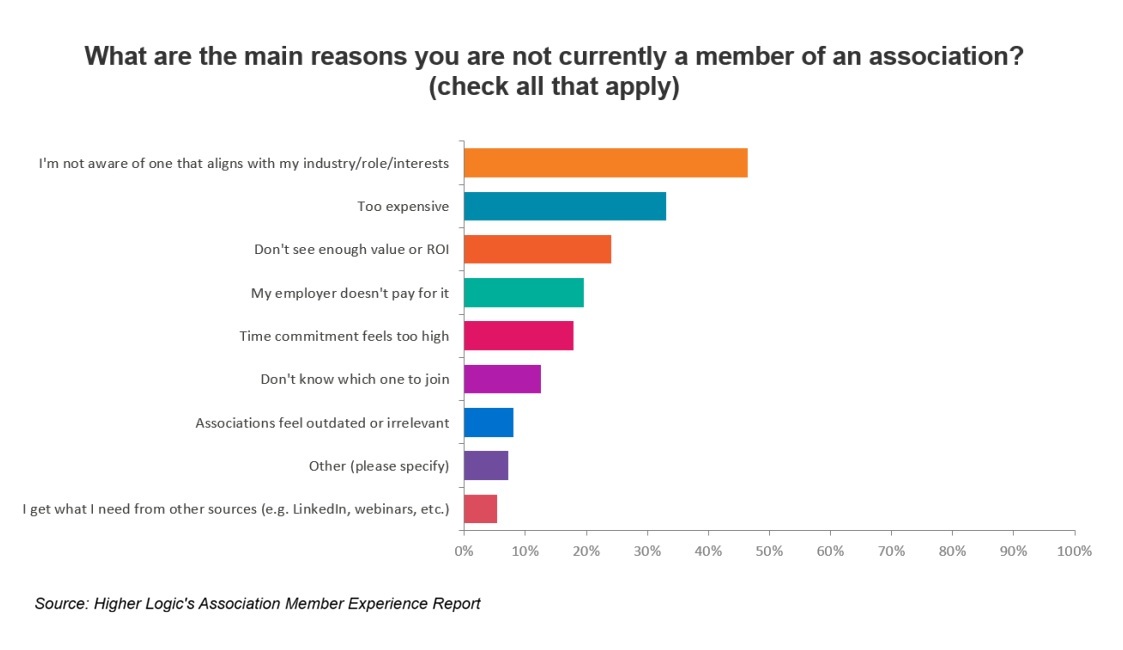
Associations will need to improve their search (SEO) and AI discoverability strategies to ensure that they’re showing up where their audiences are searching for information. That means creating content around the real questions professionals are asking, using plain, role-based language, and structuring pages so both search engines and AI tools can easily surface association expertise as authoritative answers.
3. Value Propositions Need to Be Outcome-Focused and Collaborative
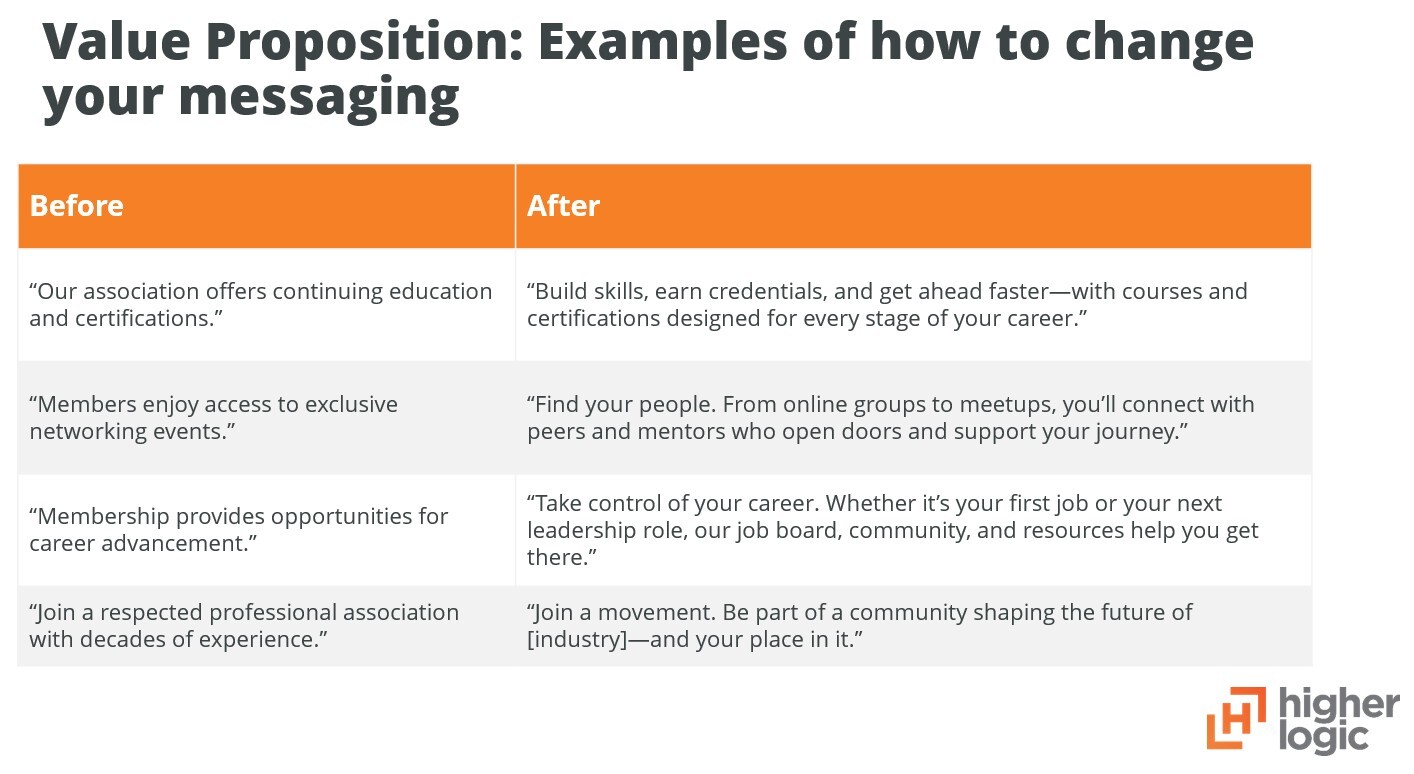
While most associations offer meaningful benefits, many struggle to articulate that value in ways that resonate with prospects. Only 11% of associations describe their value proposition as “very compelling,” according to the 2025 Membership Marketing Benchmarking Report.
That disconnect is less about the absence of value and more about how that value is framed. “Members don’t join for benefits packages, they join for transformation,” said Roberta Rosenberg, senior account director, MGI. “They stay when the value they receive is clear, ongoing, and tied to real outcomes in their professional lives.”
Associations that emphasize outcomes over feature lists are better positioned to attract and retain members, particularly as generational expectations continue to shift.
As younger professionals become a larger share of the workforce, value propositions must also account for how members experience membership across different career stages. Younger members are often looking for opportunities to collaborate, not just passively receive information. “We can’t assume younger professionals are going to inherit our engagement models,” Fuller said. “We have to assume they’re going to design them and we have to leave space for that if we want to attract new members.”
4. Community Is Central to Member Experience
Community has moved from a supporting feature to a central part of the member experience. In the 2025 Association Member Experience Report, 79% of members say their online community is valuable for networking and learning. Members place similar value on access to peers and access to information, because in practice those two things are tightly linked.
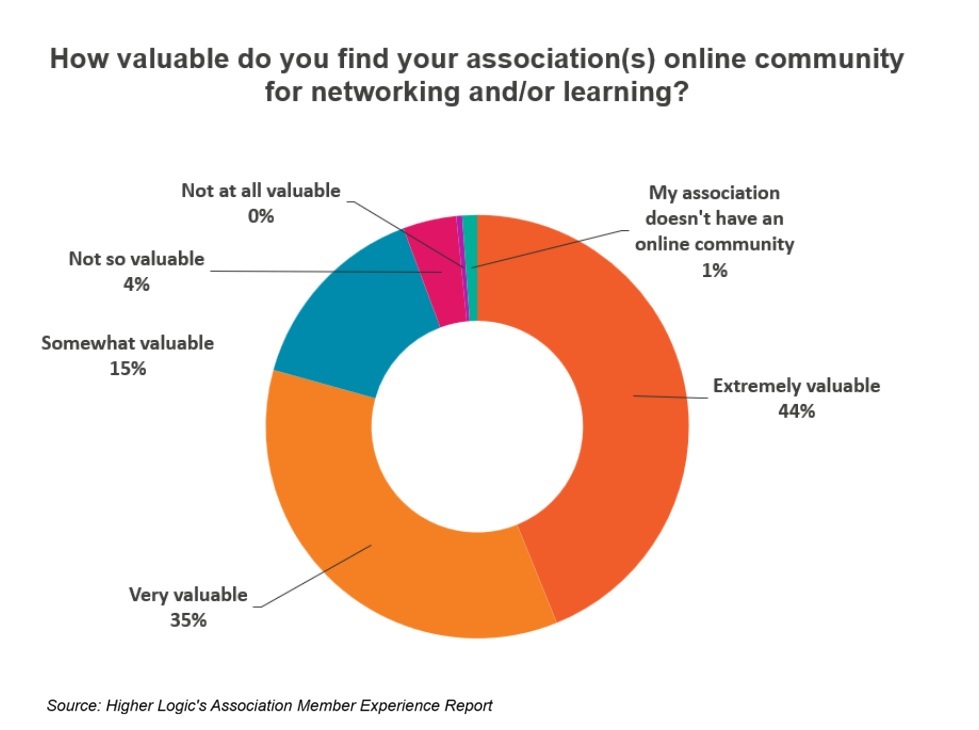
“Members value receiving content and networking and community at about the same level,” said Rosenberg . “If you reinforce one without reinforcing the other, you’re doing a disservice to your organization.”
What members are seeking is not just content, but context: the ability to learn how others in their field interpret new information, apply it in real-world situations, and respond to emerging challenges. Yet community participation is often constrained by time and relevance. When members disengage, it is usually due to friction—platforms that are hard to navigate, conversations that are difficult to find, or answers that require too much effort to uncover.
This is where AI can meaningfully strengthen community value. When applied within a community environment, AI can help surface relevant discussions, summarize prior conversations, and direct members to trusted peer insights more quickly. Rather than replacing human interaction, these tools make the collective knowledge of the community easier to access and apply.
5. Personalization Is an Expected Part of Membership
Eighty-four percent of members say a personalized experience is important, and members who feel their experience is tailored to their needs report significantly higher engagement and renewal intent.
Personalization extends beyond targeted emails. Members increasingly expect associations to understand their career stage, interests, and goals—and to reflect that understanding across education, community, and communication.
For many associations, this represents a shift from broadcasting information to curating experiences. Instead of sending the same messages and educational opportunities to every member, organizations are increasingly expected to guide members toward what matters most to them. That could be a learning pathway, a leadership opportunity, or a peer group aligned to their role. Delivering this level of relevance requires associations to connect data across systems and design experiences that reflect member needs.
“Sometimes, when you work for an association, leadership may want to cut technology investments. They see the line item in the budget and think, ‘That’s expensive. We don’t want to pay for that’,” said Kelly Whelan, host of The Member Engagement Show and senior content marketing manager at Higher Logic, during a recent webinar on association trends. “When that’s happening, it’s important to articulate the cost of not having that technology: the cost in terms of time, the impact of staff having to do things manually, and the cost of your members not having a good experience because you don’t have the tools to give them the personalization that proves your association’s value.”
6. AI Is Reshaping Member Expectations
AI is rapidly reshaping what members expect from their associations—and most members are ready for it. In Higher Logic’s research, 94% of members say they are comfortable with associations using AI tools for search, personalization, and support, provided those tools are transparent and human centered.
For associations, AI presents opportunities to improve access to expertise, reduce friction, and allow staff to focus more on strategy and relationship-building.
“AI isn’t replacing expertise,” Fuller said. “It’s removing the overhead between questions and insight. That’s what allows people to get to value faster.”
As AI becomes more widely available, the differentiator for associations will not be access to the technology itself, but the quality of the knowledge it draws from. Associations sit on decades of trusted content, peer discussion, and practitioner insight—assets that general-purpose AI tools do not have. When AI is applied within that context, it can help members find relevant answers faster while preserving the credibility and nuance that come from real-world experience.
This places new emphasis on data stewardship and transparency. Members are open to AI when they understand how it’s being used and when it clearly supports (not obscures) the human expertise at the center of the association experience.
What the Next Chapter of Membership Requires
The future of association membership will be shaped less by any single trend and more by how thoughtfully associations bring these elements together. Associations do something no algorithm, platform, or standalone resource can fully replicate: they bring people together around shared challenges, shared standards, and shared progress. Technology, data, and AI matter—but only insofar as they make those human connections easier to find, easier to sustain, and easier to turn into real-world impact.
That shift requires associations to be intentional about how membership is defined and delivered. “The future favors associations that move from membership as a status to membership as a service,” Fuller said. “That means making membership personal, portable, and relevant to where people are in their careers and their lives.”
As associations look ahead, the opportunity is not to chase every new tool or trend, but to design and continuously refine experiences that help members grow over time. In doing so, associations prove ongoing value not by default, but by consistently showing up with relevance, insight, and connection that members won’t want to replace.