

Lights, Camera, Leadership: Gary LaBranche’s Second Act
The scene unfolds in the dark.
It’s nearly 4 a.m. on a quiet lake in Crestline, California. Floodlights cut through the night. Cables snake across uneven ground. A camera crew moves with quiet urgency as an actress steps cautiously into the water. Just a few feet away, a small group huddles – watching, evaluating, deciding.
Among them is Gary LaBranche, FASAE, CAE, the CEO of Risk and Insurance Management Society (RIMS), and a 45-year veteran of association management.
Not in a convention center. Not in a boardroom. But on a film set, serving as executive producer of an independent psychological thriller.
As managing director of LaBranche Productions, LLC, Gary and his wife, Karen, are most recently the executive producers of The Otherkind, an sci-fi thriller directed by Mary C. Russell and produced by Caroline O’Meara.
At first glance, the worlds of association management and film production couldn’t seem more different.
But LaBranche sees it otherwise.
“They’re more alike than different,” he says.
An Unexpected Origin Story
Like many great stories, this one began unexpectedly.
There was his daughter Catie’s early interest in theater, and later, film, which drew the family deeper into the arts. There were chance encounters with – and modest financial support for – independent filmmakers during years of travel. And then there was a moment – equal parts humorous and catalytic – during the early days of the COVID-19 pandemic.
Watching a virtual Easter service in 2020, Karen leaned over and whispered, “Wouldn’t it be interesting if one of these people were murdered while on-screen during a service? And, what if one of the others who appeared to be on-screen committed the murder?
The comment was offhand – a product of Karen’s quirky sense of humor. The idea – a mashup of Alfred Hitchcock’s Rear Window meets video conferencing – was not.
Soon after, the couple found themselves developing a television pilot. Then came deeper involvement in film production. What began as COVID-era curiosity quickly evolved into commitment, and ultimately, into a second creative pursuit running parallel to a decades-long leadership career.
Risk: Managed and Embraced
If there’s one thread that connects LaBranche’s two worlds, it’s risk.
At RIMS, risk is something to be analyzed, mitigated, and strategically managed. In filmmaking, risk is unavoidable, and often unknowable.
“Every film is by its nature a risky project,” LaBranche said. “There are so many things that can and do go wrong. It is important to be risk aware but at the same time you must be risk tolerant in the moviemaking business.”
That philosophy isn’t abstract – it has been tested in real time. During RISKWORLD 2023 in Atlanta, LaBranche and his team were forced to navigate a crisis far removed from any tabletop exercise.
On the event’s final day, news broke of an active shooter in the Midtown area. With an armed suspect at large, LaBranche and the RIMS staff immediately activated emergency protocols, coordinating with the venue’s dedicated police department to confirm the Georgia World Congress Center was secure while rapidly communicating updates to 10,000 attendees through email, mobile alerts, digital signage, and even a quickly produced video message recorded on-site.
As the situation unfolded and uncertainty persisted, LaBranche and his team made the difficult call to cancel the remainder of the conference – including the closing keynote and evening events – recognizing that even if the threat were resolved, moving forward would not reflect the moment, respect those injured and killed, or the be true to the organization’s values. It was risk management in its most human form: balancing safety, responsibility, and empathy under pressure.
On the set of The Otherkind, risk wasn’t theoretical – it was physical and immediate.
Filming during the pandemic required strict COVID protocols, including daily testing and a dedicated on-set safety officer. Night shoots in and near water demanded lifeguards, lighting precautions, and constant vigilance. Equipment, terrain, and timing all introduced variables that had to be managed in real time.
It’s a mindset that translates directly back to the CEO role, where incomplete information and high-stakes decisions are part of the daily landscape.
Leading Complex Systems
Whether orchestrating a global conference or producing a film, LaBranche operates in environments defined by complexity.
At RIMS, he leads an organization with $22 million in revenue and a diverse professional staff. In film, the structure is different but the dynamics are familiar.
“There are far more moving parts than people realize,” he says.
On set, that includes cast, crew, equipment, locations, schedules, and creative direction. Off set, it extends to contracts, intellectual property, payroll, and distribution agreements.

In both settings, LaBranche approaches his role as a steady coach and attentive listener, supporting his team and creating space for others to lead.
“I work to keep people focused, support decision-making, and step in when needed,” he explains.
The Power of Story
Perhaps the most profound crossover between LaBranche’s two roles lies in storytelling.
In film, storytelling is everything – structure, pacing, emotion, and audience experience.
Increasingly, LaBranche sees association conferences like RISKWORLD through the same lens.
“I look at our general sessions not as separate events, but as part of a narrative arc,” he says. “We’re telling a story.”
That shift has LaBranche thinking more intentionally about flow, tone, and visual experience.
After watching The Otherkind dozens of times in post-production, he’s also developed a sharper eye for detail: lighting, angles, composition, and how moments translate visually.
In an era where visual content is constantly captured, manipulated and shared, that perspective matters.
“We’re a visually oriented world today,” he says. “Creators must think about how everything looks and how it makes the viewer feel … It’s important to design the look and feel of the convention so that it tells a visually rich and compelling story.”
Business Behind the Scenes
While filmmaking is often associated with creativity, LaBranche is quick to point out the business realities behind the art.
From managing contracts and payroll to navigating intellectual property and distribution deals, the operational side of film production is rigorous, and familiar.
“These are all things I’ve done in the association world,” he says.
That includes negotiating agreements, ensuring compliance, and managing financial risk – skills that have proven invaluable as The Otherkind moves through the distribution process and into streaming platforms.
Learning, Listening, and Letting Go
Stepping into filmmaking required LaBranche to embrace something many seasoned leaders find challenging: being a beginner again.
“It was like learning a whole new language,” he says.
That meant listening closely to directors, actors, and creatives whose expertise came from entirely different disciplines.
It also meant gaining a deeper appreciation for the passion that drives the film industry, where long hours and uncertain pay are often the norm.
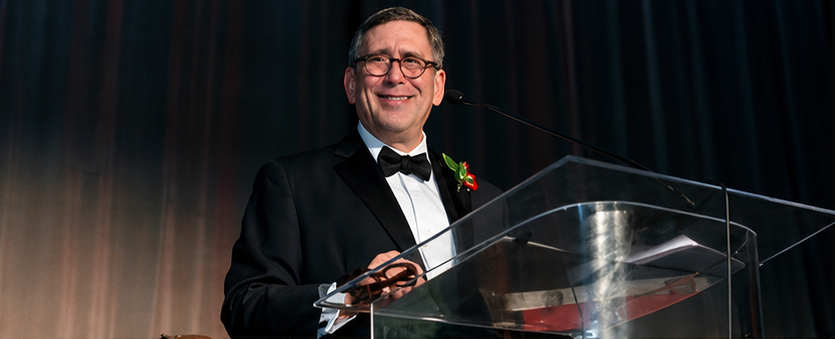
“Actors, directors, crew are all incredibly committed in what is a highly competitive and consolidating marketplace,” he says. “It’s inspiring.”
At their core, both associations and films are about connection.
Both seek to engage an audience, tell a story, and create a meaningful experience.
“You’re always thinking about the audience,” LaBranche says. “What do you want them to feel? What do you want them to take away?”
Whether delivering a keynote, publishing content, or producing a film, the goal is the same: to resonate.
Looking Ahead
With The Otherkind earning awards at film festivals and securing distribution, LaBranche’s production journey is far from over.
But what comes next is still an open question – one shaped as much by financial realities as creative ambition.
For now, the focus is on bringing the current project to audiences and seeing where the journey leads.
One thing is certain: the experience has changed how LaBranche sees the world.
Watching a film is no longer passive. Every scene prompts new questions: about cost, logistics, design, and execution. Once you’ve been behind the curtain, you can’t unsee it. And perhaps that’s the ultimate takeaway.
Whether leading an association or producing a film, LaBranche is doing the same essential work: navigating complexity, guiding people, managing risk, and bringing stories to life. Just with a different lens.

Chris Vest, CAE is vice president, corporate communications and public relations at ASAE. MORE
Got an article tip for us? Contact us and let us know!




Comments