
 Sponsored By eShow
3 Things Event Organizers Should Know About Facial Credentialing
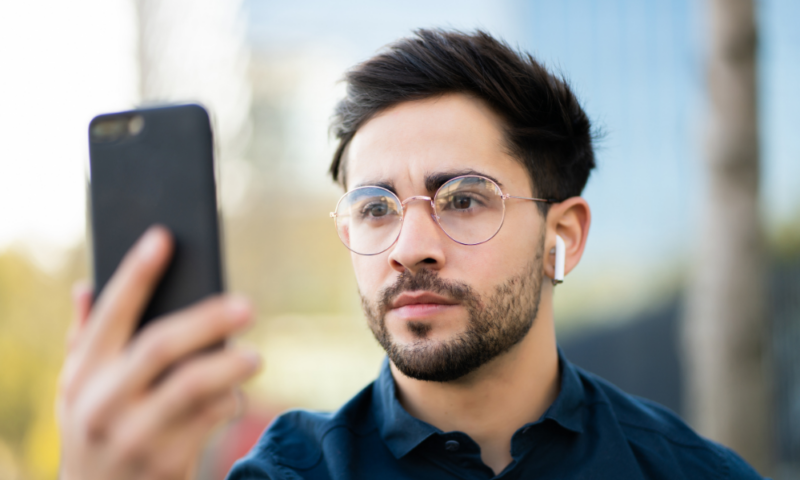
We unlock our phones with our face. We use biometric scanning at the airport to get through security. Facial authentication isn’t new technology — it’s just new to the B2B events space.
As organizers start exploring faster, more modern check-in options, facial credentialing is entering the conversation. But between privacy concerns, conflation with facial recognition (there’s a difference, more on that below), attendee adoption, and the practical question of whether it’s worth the investment, there’s a lot to sort through. Here are three things worth knowing.
1. Your attendees already understand the technology.
Consumer adoption of biometric technology is already well ahead of the events industry. Nearly 70 percent of people have used biometric authentication and consider it faster and easier than passwords. Half of all air travelers used biometric identification at an airport in 2025, up from 46 percent the year before—and 85 percent of those who used it reported high satisfaction. Of people who use facial biometrics on their devices, 68 percent use it to unlock their phone or laptop. The familiarity is there. And it’s growing.
Wicket, (not the AMS company) which provides a facial authentication platform trusted by professional sports team venues across the NFL, NBA, MLB, MLS, and NHL, has surpassed one million opt-in users and processed over eight million biometric transactions. And it’s not limited to stadiums. Salesforce’s Dreamforce, a B2B conference of roughly 50,000 attendees, has seen a 60 percent enrollment rate, with 80 percent of enrolled attendees using it to check in.6 Facial credentialing is already working at significant scale in environments that look a lot like yours.
2. It solves a problem you might not realize you have.
Event check-in has gotten faster over the years. Barcode scanning and self-service kiosks have shortened the process on the system side. But for events that use barcode scanning, the attendee still has to do their part before the scan can happen—setting down their bag and coffee, finding their phone, searching for the confirmation email, adjusting screen brightness and zoom so the scan works. For events using name or badge ID number lookup, the process is simpler but inherently slower. Either way, there’s friction that the current processes can’t eliminate.
None of these preparatory steps show up on a spec sheet, but every one of them adds time and effort, both physical and mental. These small tasks stack up and can make something simple feel effortful. In that first moment of an event that should be welcoming and engaging, it can be a detractor. Your attendee won’t say check-in was frustrating, but they’ll feel the effect of those small moments of friction.
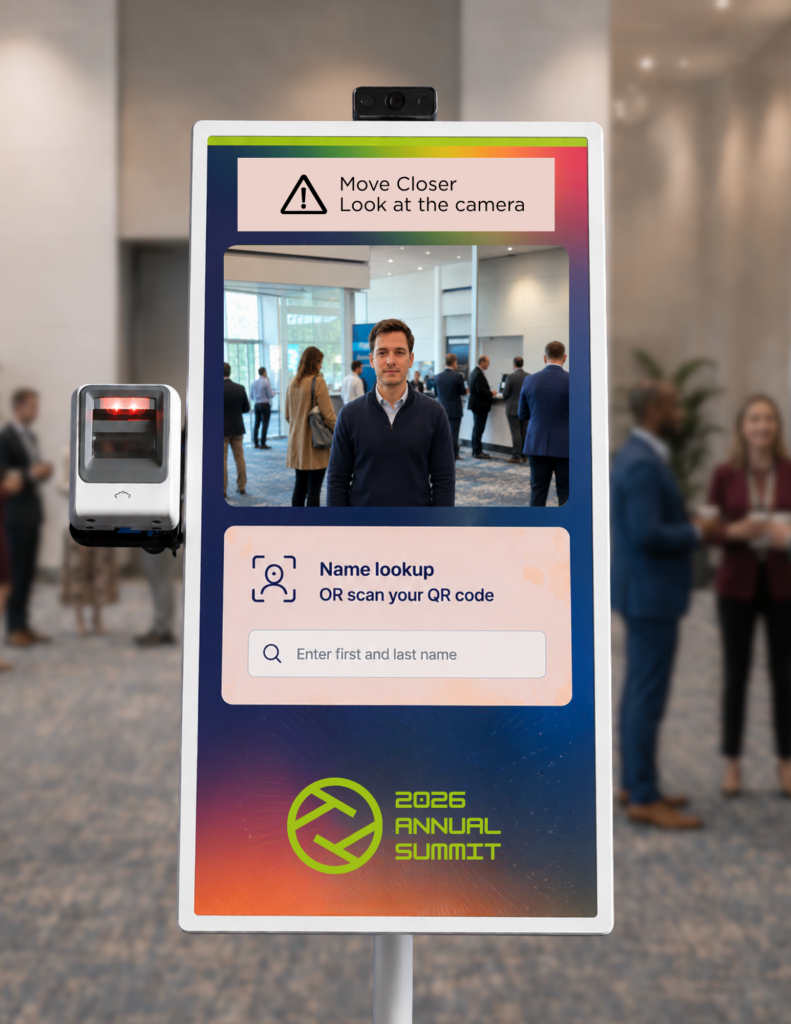
Facial credentialing removes them entirely. Enrolled attendees approach a check-in station, are authenticated in less than one second, and retrieve their badge from the adjacent printer. No phone, print out, or laborious process required. Check-in becomes something attendees simply walk through instead of think through.
3. Trust is earned, not assumed.
The unlocking-the-phone analogy only goes so far. When attendees unlock their own device, they feel in control. When someone else’s system is authenticating them, the dynamic shifts. Earning that trust comes down to how organizers communicate and implement the technology.
It also means understanding what this technology actually is—and what it isn’t. Facial recognition identifies unknown people. It scans a face and searches an extensive database to figure out who someone is, often without their explicit knowledge or consent.
Facial authentication confirms a known person: someone who has deliberately opted in and chose to use the system in this way. Because it’s consent-based by design, it aligns with biometric privacy regulations such as GDPR and CCPA. One is designed to identify people who don’t know they’re being scanned. The other is designed to welcome people who chose to participate.
The most successful deployments share a few things in common:
Enrollment is always voluntary and removable. No attendee should ever feel pressured or expected to participate, and they can change their mind at any point. Making it opt-in isn’t just a privacy best practice. It’s what builds the trust that drives adoption in the first place.
Transparency starts in the registration flow. When attendees understand exactly what happens with their data—that the enrollment photo isn’t what’s used to authenticate them, that the system converts it into an encrypted biometric template that can’t be reconstructed into an image of their face, and that they can request removal at any time—enrollment rates go up, not down.
The alternatives are always available. Attendees who don’t enroll can check in the same way they always have. Barcode scanning, manual lookup—nothing changes for them. Facial credentialing adds an option. It doesn’t take one away.
Privacy is the foundation. The right partner builds privacy into the architecture, not as an afterthought. That means no crowd surveillance and no data shared with or sold to third parties.
So, What Now?
Facial credentialing is gaining traction in the B2B events space. The question is whether you’ll be the organizer who introduces it thoughtfully, earns trust, and delivers a check-in experience that matches the rest of what you’ve built.
To learn more, visit goeshow.com.